





Baltimore, Maryland is 39 miles from Washington, DC—arguably the most powerful place on earth. Last Monday, as President Obama welcomed the Japanese Prime Minister to the White House on Pennsylvania Avenue, a fire raged near a row house on the corner Pennsylvania and North Avenues in Baltimore. The fire was symbolic of the acted upon anger of many blacks; an anger prompted by the death of Freddie Gray at the hands of Baltimore police officers.
For a week, Baltimore took the reins from our nation’s capital as the most politically charged place on the planet. Buildings burned. Bricks were thrown. Lines were drawn. Cameras and helicopters showed up. Sides were taken. Then the cleanup began.
But the rubble wasn’t only on Pennsylvania and North Avenues in Baltimore. There’s still rubble in the hearts of the Black community. We’ve got a lot of cleaning up to do. Self-examination is just as much a community practice as it is an individual one.
There is plenty we should celebrate about Black community’s response to the media’s newfound interest in Baltimore. But there’s also plenty that our community needs to work on. There are at least three things I think Baltimore taught us about the Black community.
1. Black Don’t Crack
There’s a timeless adage in the Black community: Black don’t crack. Though applied in most instances to how well Blacks age, I think it appropriately describes the Black community’s resilience. Since the late 19th Century, race riots have been as American as apple pie. Hundreds of race riots have occurred in major U.S. cities. In several instances, God sovereignly raised a remnant of people to ground the Black community after a violent uprising—many of whom were church leaders.
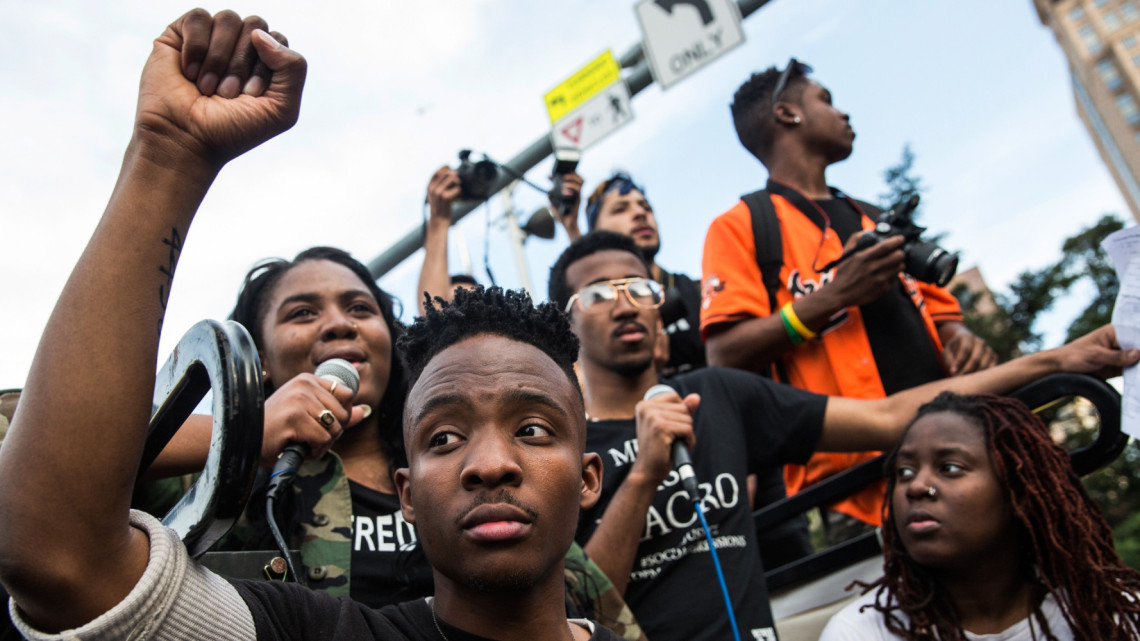
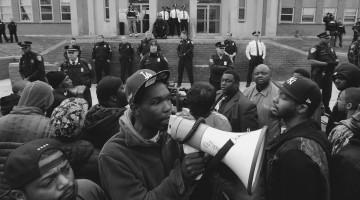
Last week, Baltimore showed us “Black Don’t Crack”. The protesters who demonstrated without incident for at least seven days before last Monday’s disturbance reclaimed the narrative. They closed ranks and marched—peacefully. They focused on justice for Freddie Gray rather than the red herrings of burning buildings, thugs, and momma beat downs. They stood shoulder-to-shoulder on shattered glass, condemned the violent few, and forced the media to focus on the social, economic, and judicial atrocities present in Baltimore for decades—atrocities present before the cameras showed up.
Thank God for the local community. As PCA pastor Mike Khandjian shared from Baltimore last week, the local community—some of them Reformed church leaders—banned together to clean up the area. He noted “residents of Sandtown (the neighborhood where the disturbance happened) are among the proudest of any neighborhood I have ever met. They love their community.” He went on to observe “two guys, one black and the other white…who locked arms for the sake of a healed neighborhood.” That sounds like a proud, godly heritage of a race that has learned to bend and contort, but still refuses to crack.
2. Electing Black Government Officials Doesn’t Make Us Post-Racial
Baltimore is a Black city through and through. A majority of its residents are Black. Many of the officials and politicians who represent Baltimore City are Black. Last week we saw plenty of men and women who look like us address the national media—even President Obama decided to chime in.
Let’s be clear here though. Just because we have Black faces in corner offices, doesn’t mean that we shouldn’t focus on our street corners. Black elected officials should not serve as evidence that we live in a post-racial society. Not when 1 in 3 Black men can expect to find their way to prison at some point in their lives. Not when private prisons use third-grade reading data to plan for future prison beds. Not when the economic disparity in urban communities like Baltimore tell us that people live in “food deserts”, neighborhoods where there aren’t many healthy food options.
I’m grateful for the progress we’ve made. But we can’t let the faces with important-sounding titles on the television screen convince us that our society is post-racial when there’s so much evidence to the contrary.
3. There’s Another Form of Black-On-Black Crime
Last Friday, Baltimore’s Chief Prosecutor—who also happens to be Black—announced that Freddie Gray’s death was a homicide. She also announced that she would charge six police officers with the homicide. Photos of the six officers were later released. Surprise. Three of the six officers were Black.
There’s been so much talk about the Black community’s relationship with White officers, but what can be said of the Black community’s relationship with Black officers? It hurts to think that three Black officers were involved in Freddie Gray’s death. It indicates that there’s a possibility to esteem one’s shared vocation more than one’s shared humanity—and, in this instance shared ethnicity. At the very least, on a human level, one would hope that these three officers would have seen Freddie Gray’s humanness and looked past, well, his past. When a man’s spine is shattered and body broken, his safety should be more important than his rap sheet.
Black officers have a unique opportunity to build bridges in urban communities. While we mourn the Black-on-Black crime, let’s mourn this form too. Let’s pray that God transforms the hearts of men and women of color in law enforcement who see Black youth as less than human. Imagine if Black men and women in uniform could serve as reconcilers. That could completely transform police/urban center relations.
So that’s my prayer—and my overall reflection on last week’s events in Baltimore. Lord, transform hearts. Personally, I can’t afford to see another urban Black youth become a hashtag.
Disclaimer: RAAN is an organization committed to providing a variety of Reformed voices a platform to share their content. While our contributors subscribe to the basic tenets of Reformed thought, they offer a diverse number of opinions on various topics. As such, our staff members may not share our contributors’ opinions and publishing this content shouldn’t be viewed in such a way.





http://thechristiancurmudgeonmo.blogspot.com/2015/05/if-youre-not-mad-already-this-will-help.html