






There are times when you have to imagine that black justice pioneers like Harriet Tubman, Booker T. Washington, Frederick Douglass, Sojourner Truth, and the like, must be turning in their graves at the nonsense circumstances that black Americans find themselves in in 2013.
For example, MTV’s Video Music Awards promoted, yet again, the race-driven stereotype of black women as sexualizedjezebels. The Jim Crow Museum at Ferris State University explains the history of the jezebel stereotype:
The portrayal of black women as lascivious by nature is an enduring stereotype. The descriptive words associated with this stereotype are singular in their focus: seductive, alluring, worldly, beguiling, tempting, and lewd. Historically, white women, as a category, were portrayed as models of self-respect, self-control, and modesty – even sexual purity, but black women were often portrayed as innately promiscuous, even predatory. This depiction of black women is signified by the name Jezebel.
While Myley Cyrus, 23, eviscerated her dignity and mocked the values of the family that nurtured her, she used black women’s bodies as sex props while she simulated lewd acts on stage with 36-year-old, married recording artist Robin Thicke. Only black feminists had the courage to connect the Cyrus episode to the historic subjugation of black women by elitist white women. Did Harriet Tubman risk her life to free slaves so that Myley Cyrus could use black women as sex props? Additionally, those black women were also complicit in participating with Cyrus in their being dehumanized and used as mascots.
If the jezebel stereotype on display on MTV isn’t enough to make a case for cultural regression, all over America, a group of progressive elites seem to have successfully convinced mainly black and Latino workers that they should be able to sustain a life and career working as adults in low-skilled jobs at fast-food restaurants serving the type of food that contributes to the epidemic rates of hypertension, obesity, and Type-II diabetes in their own communities.
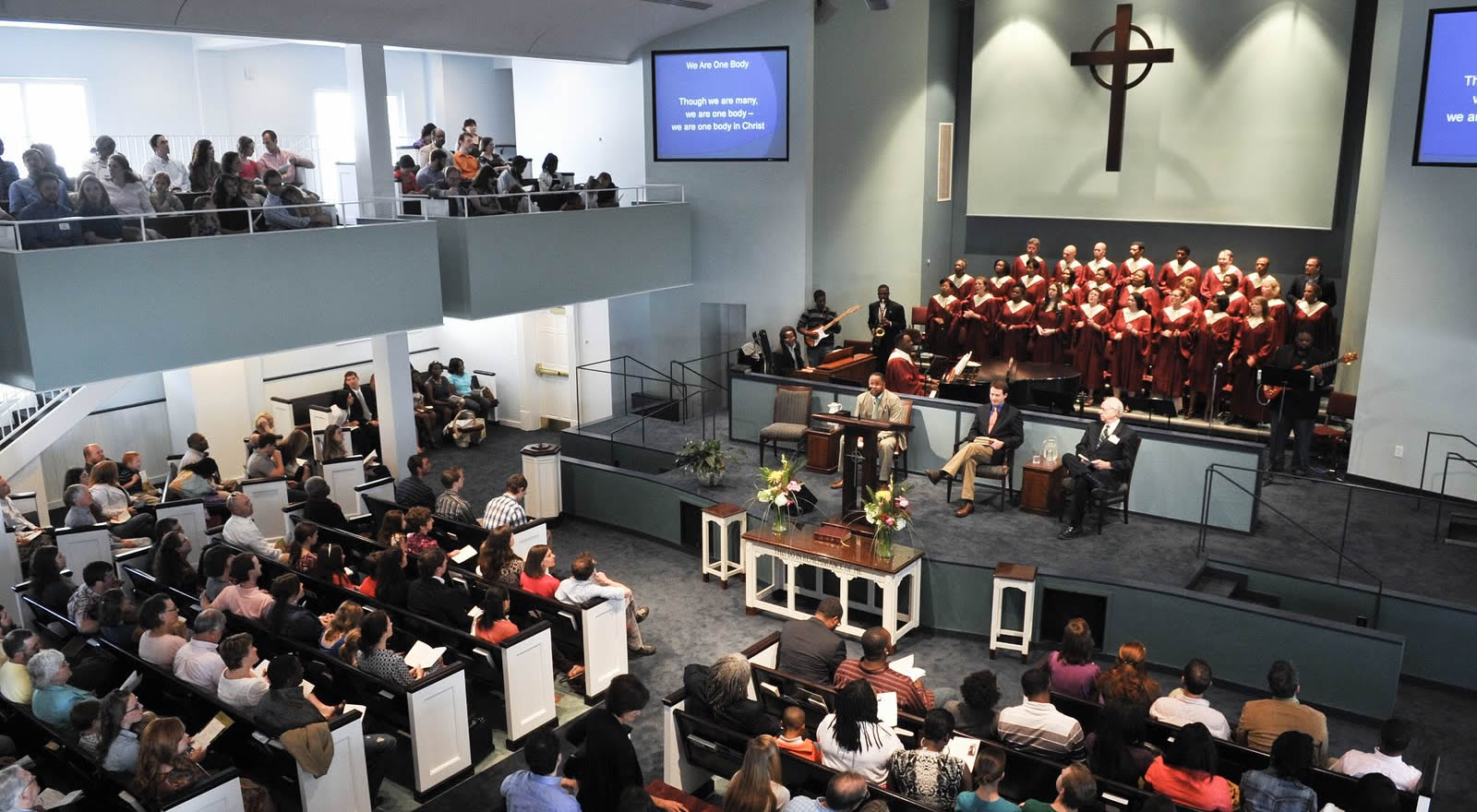
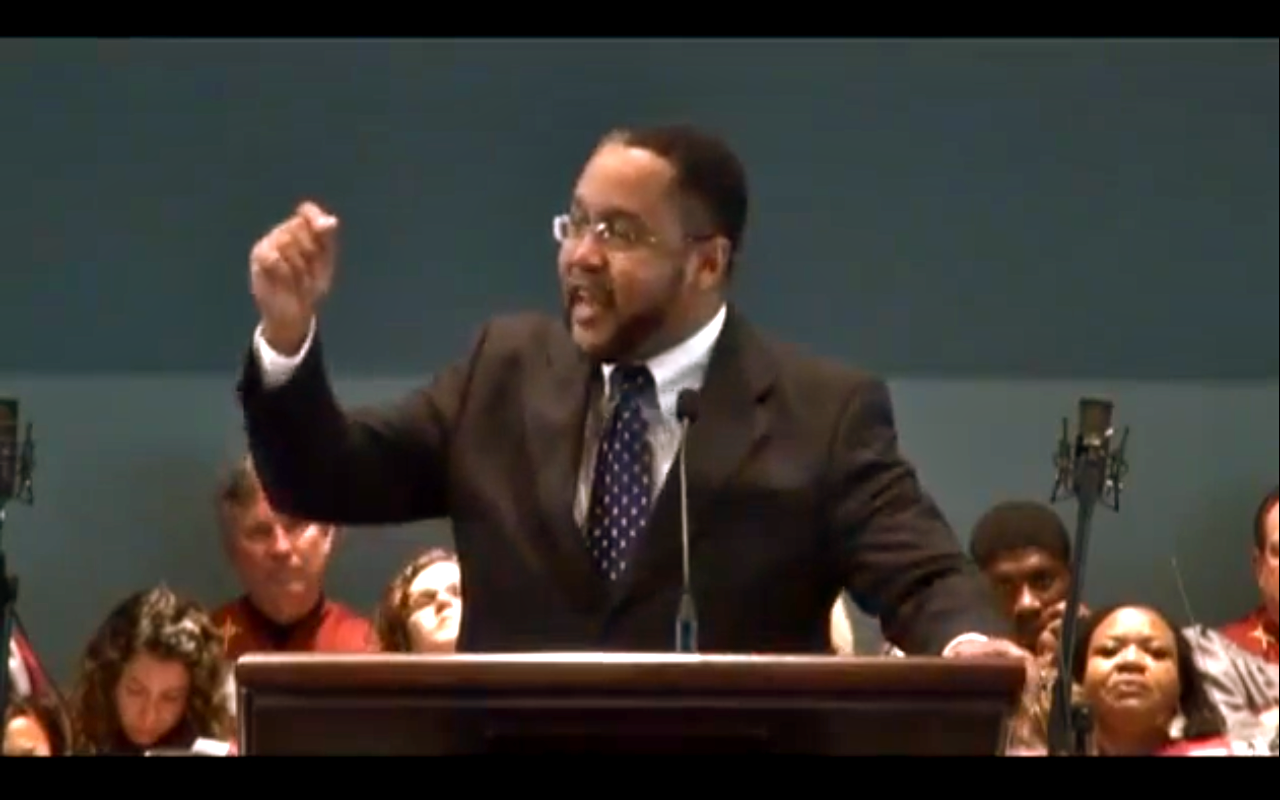
To make matters worse, even black pastors have been duped and hoodwinked into adopting the progressivist dispersal of the economic commonsense that understands a wage to be “the price of labor.” Here’s what this means: working at fast-food restaurants and selling food and drinks saturated with high-fructose corn syrup is simply not worth $15/hour. Low-skilled jobs generally have lower wages. These protests have no economic basis. So why in the world would the Rev. W.J. Rideout III of Detroit’s All God’s People Church, in protesting low wages at fast food restaurants, say something as economically unsound as this: “The bottom line is we are doing this to let the corporations know we want $15 an hour, better working conditions — and we want to be treated fairly.” The only explanation is that many blacks have sold out to progressivism rather than remaining committed to the principles of economic empowerment that freed blacks from thinking that low-skilled labor was the best they could do.
Instead of protesting fast food restaurants, black pastors, like Rideout, would better serve the black community by protesting to people in their communities to do whatever is necessary to acquire marketable skills so that they can leave fast food jobs behind in our global marketplace and make themselves more competitive. This way, they can hold the types of jobs that actually sustain a family.
In viewing nearly all of the newspaper and television footage of the fast-food protests, you have to wonder if anyone noticed that Asian-Americans were no where to be found? Why were Asian-American women not being used a sexualized props for white women at MTV? Why is that? Perhaps it is because research suggests that many Asian-Americans tend to “protest” against dehumanization and being used as pawns of social-engineering elites by getting married, investing in their children’s education, learning skills that make them more valuable and competitive in the marketplace, and refusing to be used as political pawns and mascots for progressivism.
Editor’s Note: This article first appeared at Acton Institute Power Blog.







I don’t disagree with the general thrust of the argument, but I feel like the second half suggests that an economic system that allows a stupidly low minimum wage is OK it’s just that no-one should work in those jobs.
Why are there jobs that don’t pay enough for someone to support their family? There shouldn’t be. It’s a moral and social issue, a worker deserves their pay.
Isn’t there an opportunity both to protest that aspect of an economic system and to empower those trapped in menial jobs. I don’t know that it’s a simple choice between one or another.
I’m not sold on the Miley Cyrus aspect of this article…it’s my guess that she is surrounded by many black dancers and considers herself an equal in this special sisterhood of performers …but the rest….yeppers. ♥ Dawn
I don’t think it is drawing a caricature to show the economic folly of arbitrarily raising the minimum wage to $15 an hour. You can raise it to $100 an hour and the amount of money will quickly spend like $7 an hour again as soon as the market adjusts to the artificially inflated price of unskilled labor. That is simply the truth. I guess then people can protest again to raise it to $200 an hour and restart the process…
“Economic folly”? If your statement was true from a macroeconomic perspective then the minimum wage would be meaningless altogether and statistics and history would show it. You could make the exact same argument for professional salaried jobs as well. Why pay M.D.’s high incomes, because it simply inflates healthcare prices once insurance providers catch wind of higher professional billing rates? Think about it.
“Economic folly? While I understand your point, I don’t think it’s quite that simple. However, that pendulum can clearly swing either way. It can also equate to business owners pocketing unequitable amounts of profit, while underpaying the laborer.
I find two serious errors with Bradley’s post.
First, he’s clearly assuming that “black progressives” don’t respect or encourage other blacks or minorities to pursue higher education in an attempt to find higher wage jobs. For those here who don’t know black history this is far from the truth. Intellectual progressives like W.E.B. DuBois were largely pro-education, and more specifically into black’s being encouraged toward higher learning. Go somewhere like Howard University (historically black Univ.), and it will literally take minutes to realize that the campus is full of socially conservative, pro-education, black progressives. While Anthony may not be addressing this audience, he’s seems insincere in an attempt to draw an inaccurate picture to support his stance.
Second, he fails to mention the legacy of folks like Booker T. Washington. Who saw the answer to black upward financial mobility mainly resting in the acquiring of specialized skills, many in jobs requiring manual labor. So, I’m not really clear on what Bradley’s getting at here.
Fighting for justice by petitioning for more fair wages should not a be used as a covert platform to denigrate black progressives. It should celebrated as uniquely Christian, to some degree, as we realize that the gap between rich and poor in America is at historic high, and that justice is not being pursued. Especially amongst conservative black and white Christians, who sit by quietly, and rarely if never address these types of social ills from the pulpit. Except for those like Tim Keller, and Jim Wallis (and he’s not even conservative). LOL
It’s so interesting to me that this conversation always comes back to Washington vs. DuBois. Not that this is problematic, but it does encapsulate two very different approaches to lifting people out of poverty.
Having said that, I do think you are minimizing the legacy of BTWashington by saying that he saw manual labor as the goal for African-Americans. Washington himself was highly educated and Tuskegee is no common institution. Ironically enough, the approach of the Obama administration, with their emphasis on vocational training through community colleges and apprenticeships, is more in keeping with Washington’s legacy than DuBois’. Acquiring a marketable skill set is not a way to keep people down; it is a necessity for upward mobility.
I certainly did not mean to minimize BTW’s legacy or background by stating that his goal was to see African American’s develop industrial labor and agricultural skills. But, it certainly was his push in terms of education at Hampton and Tuskeegee alike. This can’t be denied.
That too was one of WEB’s greatest critiques of BTW. I think it’ necessary to separate BTW from his own personal accomplishments and his dream of seeing blacks achieve social and economic liberty through the basic development of trade skills.
Certainly BTW had a distinct vision for how blacks would come into social equality that was different from DuBois and even from current paradigms. But I wonder how much of our understanding of BTW’s vision has been obscured because we are looking back on it from a modern vantage point. Today if someone touted agricultural or trade skills, it would immediately conjure up visions of migrant workers and low-paying jobs; but in that post-Civil War context, these were the skills of the future because they were the skills that would rebuild the South. It would be akin to the training that happens at tech schools today-everything from HVAC to computer networking to medical transcription. This is not to diminish university level education as a goal for anyone-black or white-but I hope we’re finally coming to a place where we’re beginning to realize the value of vocational training.
I’m really not trying to argue for one over the other, but I do think it is easy to slip into mindset that elevates certain types of work and education over others. I’m coming from a blue collar context myself and I see firsthand the dignity that comes from having a skill set-the confidence of a hard days work, the reward of being able to care for your loved ones, the satisfaction of contributing to the needs of your community. This is invaluable to human flourishing.
I couldn’t agree with you more, and well stated. We certainly need more of technical training and specialized labor skills. The shortage of workers, in America period, highlights that fact.
On that note, this article is slightly offensive to some degree. In the sense that it Mr. Bradley seems to be casting a relatively negative light on the promotion of it?
Agreed!